
 What Homeowners Need to Know
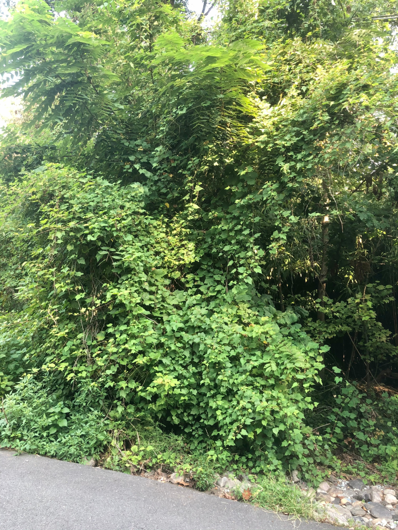
Fairfax County’s forests, parks, and neighborhood trees are under growing threat from a group of fast‑spreading, nonnative vines. These vines climb rapidly, strangling trunks, smothering branches, weighing down canopies, and tearing limbs off mature trees. As trees fall, sunlight floods the forest floor, allowing other invasive plants to take over and preventing native tree seedlings from growing.
Local conservation groups estimate that nearly a million trees in Fairfax County are at risk. Without community action, many natural areas could fail by the end of the century — meaning the trees that define our parks and neighborhoods may be down and not replaced.
Important caution:
Not all vines are harmful. Many of our native vines — including native grape, Virginia creeper, and trumpet honeysuckle — are valuable wildlife food sources and rarely injure trees. Homeowners should look carefully before removing any vine, because protecting native species is just as important as removing the invasive ones.
Why Invasive Vines Are Such a Problem
- Strangle trunks and branches as they twine upward
- Smother tree canopies, blocking sunlight
- Add enormous weight that causes branches — or whole trees — to fall
- Spread aggressively across forest floors, forming thick mats
- Prevent native tree seedlings from growing
- Spread easily through birds, runners, root sprouts, or human activity
Major Tree‑Killing Vines in Fairfax County
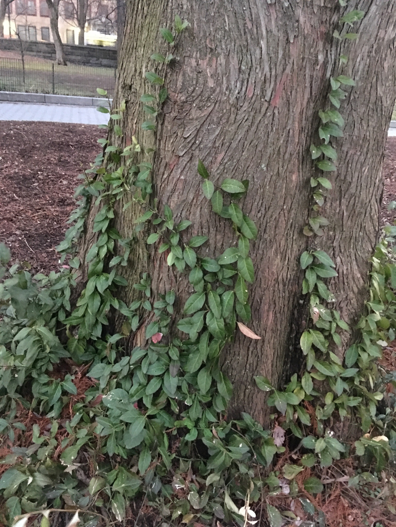
English Ivy
Clings tightly to bark and grows into heavy, trunk‑wide masses. Once it reaches the canopy, it produces berries that birds spread to neighboring yards. Ivy on the ground smothers native plants and creates mosquito habitat.
Wintercreeper
Behaves much like English Ivy — climbing trees, weighing down branches, and forming dense mats on the ground. When no tree is available, it can grow into a freestanding shrub.
Porcelain Berry
Blankets trees in thick layers of foliage, cutting off sunlight. On the ground, it forms deep, tangled masses. Its stems and leaves resemble native grape vines, but the bright turquoise and purple berries are unmistakable.
Kudzu
Known as “the vine that ate the South,” kudzu can grow up to ten feet in a single day. It smothers entire stands of trees and spreads rapidly. Although still uncommon in Fairfax County, it is a top priority for early removal.
Five‑Leaved Akebia
Smothers acres of trees with dense foliage. Like kudzu, it is still relatively uncommon locally — meaning community action can still prevent it from spreading further.
Japanese Honeysuckle
Climbs up to 20 feet, smothering trees with its leaves and girdling trunks as it twines upward. In open areas, it forms thick mats that hide invasive shrubs such as multiflora rose.
Asiatic (Oriental) Bittersweet
A powerful strangler that blankets tall trees. Its stems thicken over time, tightening around branches and sometimes pulling them off entirely.
Japanese & Chinese Wisteria
Among the most destructive vines. Their stems can grow as thick as small trees, twisting around trunks in huge bands and tearing off limbs. Runners spread in all directions, forming dense shrubs that eliminate understory plants.
How to Identify Invasive Vines
See detailed photos and identification guidance on this website.
- Before cutting any vine, make a definite identification. Several native vines look similar to invasive ones, and removing them would harm wildlife and reduce natural biodiversity. Use our online photo guides to confirm what you’re seeing.
- The features below are warning signs that you may be dealing with an invasive vine infestation:
- Vines climbing high into tree canopies
- Thick, woody stems twining tightly around trunks
- Dense mats of foliage covering shrubs or forest floors
- Heavy vine masses weighing down branches
- Bright berries (ivy, porcelain berry) or fragrant flowers (honeysuckle, wisteria)
- Rapid spread across fences, hedgerows, and disturbed soils
How They Spread
- Birds disperse berries and seeds
- Runners and root sprouts create new vines
- Human movement of yard waste spreads fragments
- Disturbed soils and sunny gaps accelerate growth
For More Information
Please visit Invasive Vines info to learn more about controlling these invaders. See Blue Ridge PRISM for detailed identification guides.