
 Mini-grant Jumpstarts 3-year Plan in Fairfax
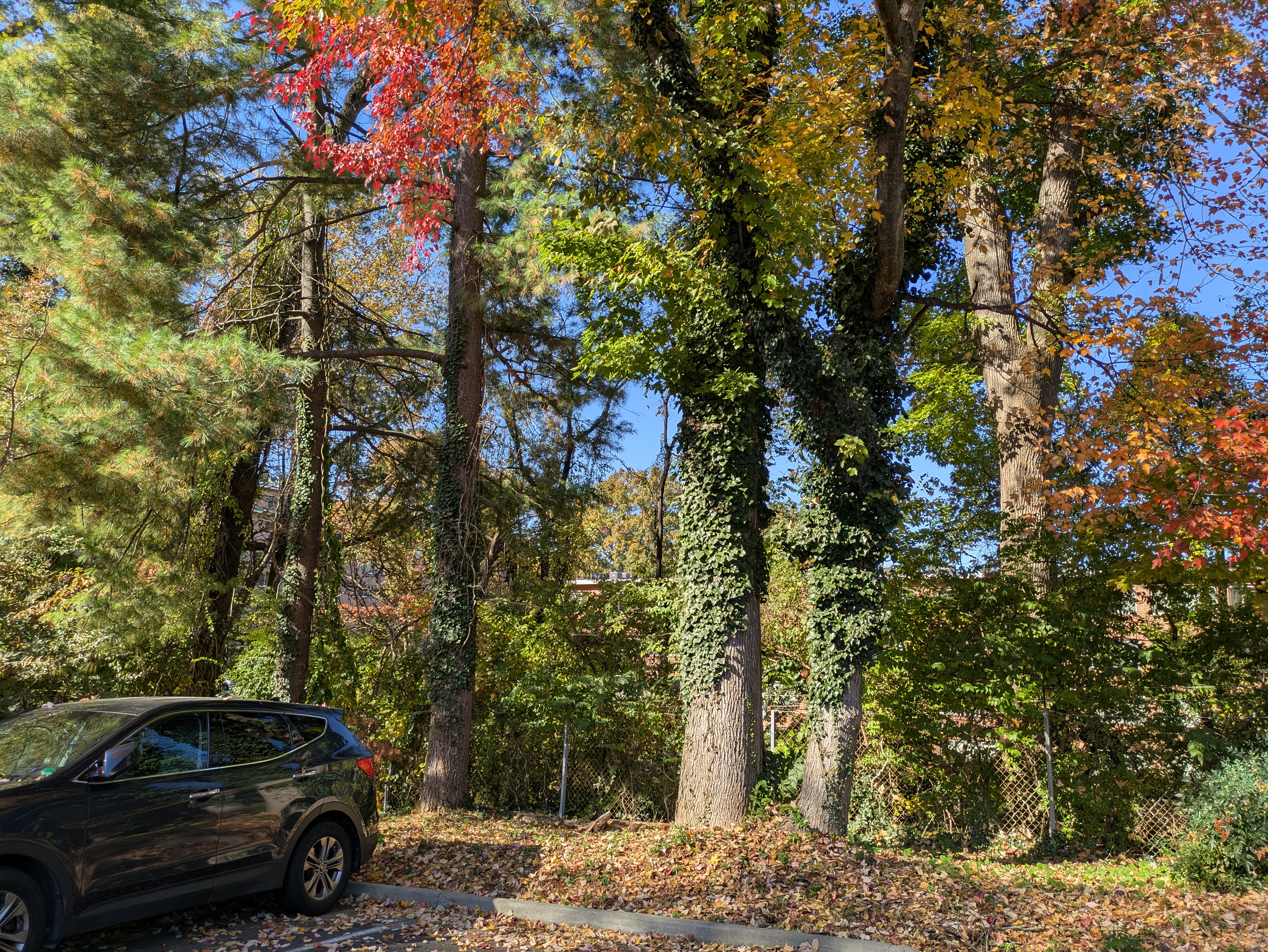
The Truro Anglican Church has a well managed property and is committed to long-term management of the landscape. They have previously initiated multiple projects against invasive species and protecting native species. The church reached out to Fairfax PRISM to help fund the initial phase of an ambitious 3-year plan to remove invasive plants along the entire property.
Main Species of Concern: Oriental bittersweet, English ivy, porcelain berry, Japanese wisteria, bush honeysuckle, autumn olive, knotweed, and Ailanthus trees.
Previous Management: Prior to this grant, the team who manages the flower gardens of the church removed problem species from the garden such as invasive butterfly bush. They have also replaced non-native plants with native plants in their garden. Additionally, they have volunteers from the community to manage bamboo on the property.
Management Strategy: The Truro Anglican Church worked with their contractor, Residential Reforestation, to create a 3-year plan for invasive species on their property. The multi-year plan will be executed primarily by Residential Reforestation, with the aid of volunteers for brush and bamboo clearing later. The mini-grant funded the first phase of the plan and focused on vines covering the bushes and threatening trees. For this phase, Residential Reforestation used cut-and-treat and hack-and-squirt methods. The church plans to continue funding follow-up treatment for the next three years.
Treatment Details: Vines were treated initially with cut and spray and require annual foliar treatment follow up. Porcelain berry requires foliar treatment at least twice annually. Wisteria was identified along the fence line from a source off-site. Foliar control can manage what encroaches onto the property. Shrub species (bush honeysuckle and autumn olive) were treated with foliar applications. Knotweed needs foliar control two times annually. Ailanthus trees were treated through hack-and-squirt. The bamboo on the property was not part of this project, but the church is working on a long-term management plan.
Project Outcomes
Trees saved: About 30 trees were saved.
Scope of the Grant: The project took place on a 3.21 acre lot.
Financial Summary
Truro Anglican Church requested a reimbursement of $1100 and were required to meet a 50% contribution match of $550. They matched contributions by funding their project directly, and put $550 towards the project, totaling $1650 for the contracted work.
Community Education
- The community consists of 400+ congregants.
- A Tree Rescuers sign providing information about invasive species was placed in a highly visible area that has been treated. The church has also informed its members about the project and has a long-term display in their meeting space about the project.
- The church plans to use materials provided by PRISM to educate their garden volunteers and bamboo volunteers about non-native species.
- The church educated small groups about invasive species including boy scouts, men’s ministry, and youth groups.
Next Steps
The church plans to continue funding treatment for the next three years to complete their 3-year plan. In 2026, they plan on two foliar treatments and one late-season hack-and-squirt treatment. In 2027-2028, they plan on at least one annual site visit control application to maintain incursion and regrowth of managed species.
Additionally, the church is working with their landscapers and arborist to deal with a large tree-of-heaven on the property. They will also be using volunteers from the community to manage bamboo, and are currently looking at a long term containment/ removal strategy.