
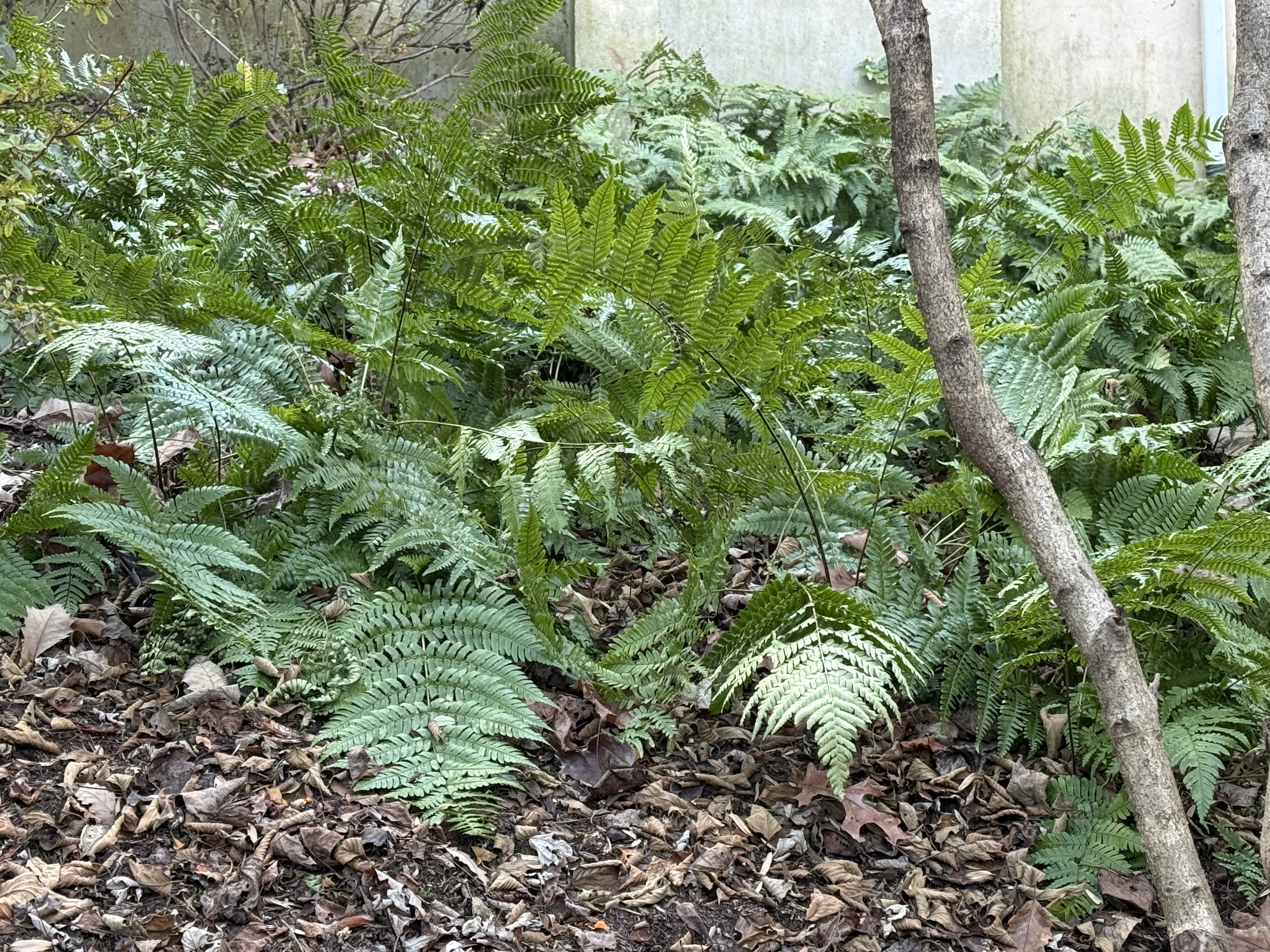
EDRR Species: Autumn Fern (Dryopteris erythrosora)
The Autumn Fern is an invasive plant from Asia. People often plant it in gardens because of its beautiful colors—its new growth looks like copper or orange-red "fiddleheads," and its leaves are shiny and bronze-green.
In places like Fairfax, you can see this fern almost the entire year, but it stands out most during the winter. Because it is one of the most popular ferns sold in garden stores, it is starting to spread quickly into wild, natural areas.
Why is it a threat?
- Pushes Out Native Plants: It grows and spreads very fast using both seeds (spores) and underground stems (rhizomes). It can take over an area, leaving no room for local plants to grow.
- Sold Everywhere: Because it is so popular in landscaping, humans move it long distances. This helps the fern reach new parks and forests much faster than it could on its own.
- A "Winter Warrior": This fern stays green during the winter when many native plants are "sleeping" (dormant). This gives it a head start and a competitive advantage over our local ferns.
 Identification
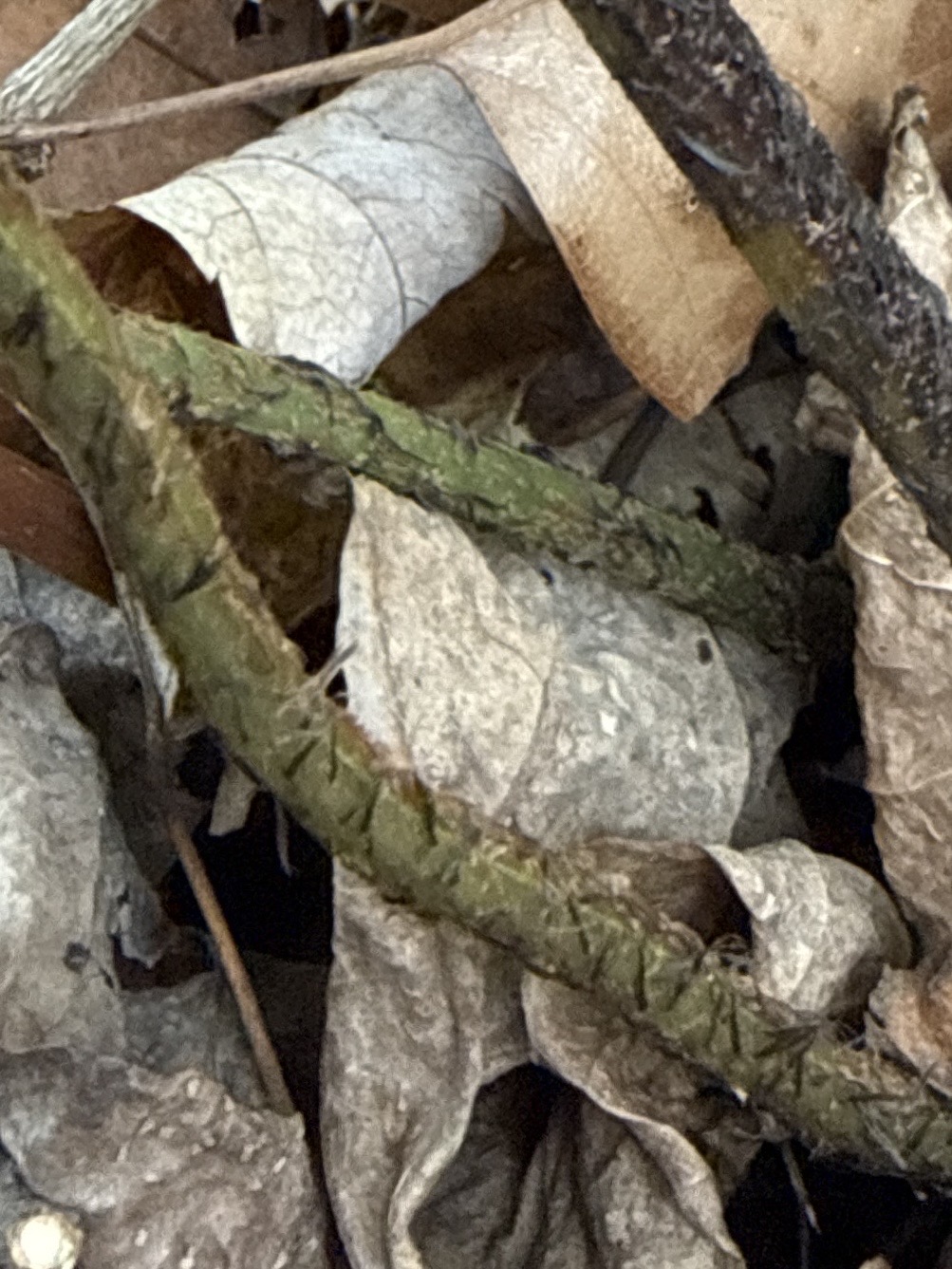
- Leaves: Mature leaves are large, shiny green, and shaped like triangles. You might see tiny black scales on the stems.
- Fronds: In the spring, new fronds are a bright copper or red-orange color. Overtime they slowly turn green.
- Red Sori (Seed Pods): Look at the back of a mature leaf. You will see rows of distinct red dots. These are called sori. They turn brown or black when they are ready to release their spores.
Note: The native Marginal Wood Fern looks very similar. Always double-check before removing a plant in the wild!
How to Get Rid of Autumn Fern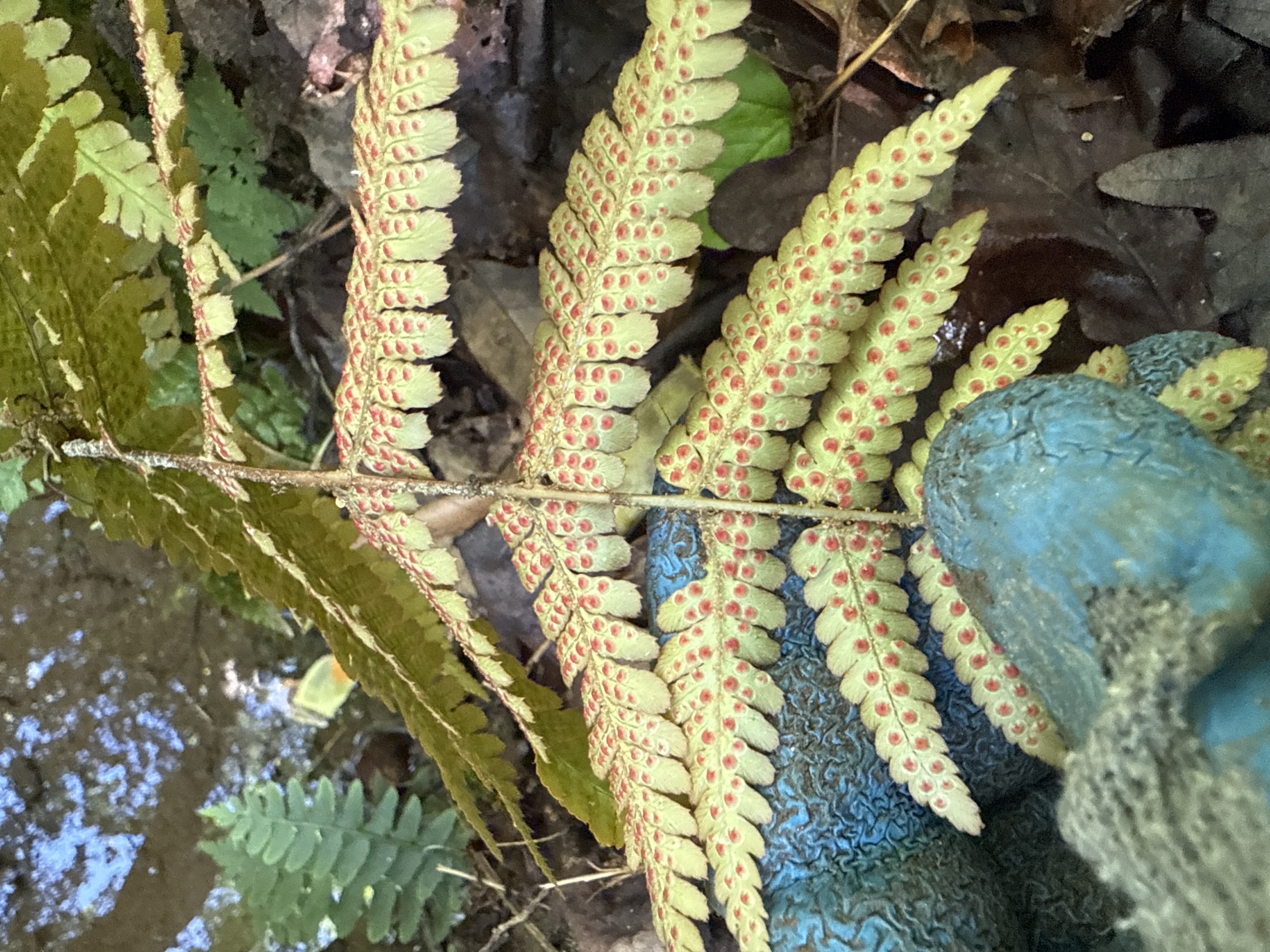
Manual Control
- Pull It Up: Dig up the plants in spring before they release their spores. Make sure to bag the entire plant—including the roots—and put it in the trash.
- Cut It Back: You can clip all the leaves off, but you will need to do this 2 or 3 times during the summer to exhaust the plant.
- Smother It: Cover the ferns with a heavy plastic tarp or a very thick layer of mulch to block out the sun.
Chemical Control
- Spray: A weed killer called glyphosate can be sprayed on the leaves, but experts are still researching how well this works for this specific fern.
Important: Always go back and check the area next year to make sure the fern hasn't grown back!
For those that need to know how to make the distinction between Autumn and Marginal wood ferns: Here are some important distinguishing characteristics
Fiddleheads - Autumn fern has pink, red, or brown fiddleheads that usually become green when fully mature
Marginal wood fern has green, gray-green, or blue-green fiddleheads
Leaf Shape - Autumn fern can be very triangular in shape, though not always
Marginal wood fern is usually oblong
Scales - Autumn fern has dark brown to black scales abundant on the stem
Marginal wood fern has Pale brown on the lower half of the stem
Sori - The sori of Autumn fern are located between the midrib of the pinnules and the edge of the leafy tissue. They are red sori in the spring
Marginal wood fern have sori located along the margins of the leaf which are red in the spring. For both plants they start to turn black by fall.
More information:
a)Pemberton R.W., Escalona E. The Remarkable Increase in the Invasive Autumn Fern, Dryopteris erythrosora, One of the World’s Most Marketed Ferns, in Eastern North America. Plants (Basel). 2025;14(15):2369.
b)Fairfax County’s EDRR Website