
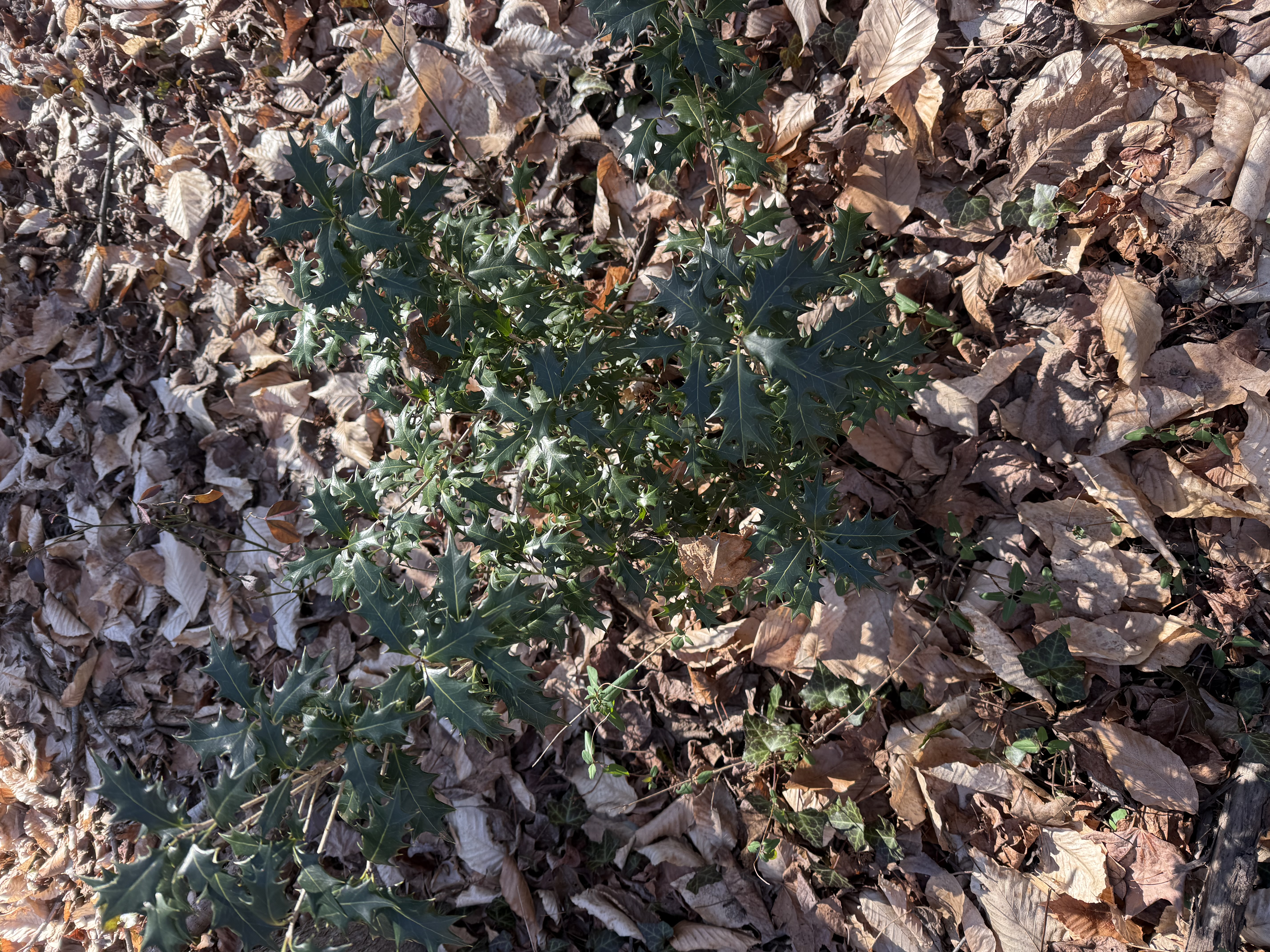
EDRR Species: Holly Olive (Osmanthus heterophyllus) is an evergreen shrub that comes from Japan and Taiwan. It is a popular landscaping plant because it stays green all year and grows quite large—up to 15 feet tall and 10 feet wide. While it looks a lot like a traditional holly bush, it is actually a different species, which is why it is often called "False Holly."
Why Is It a Problem?
- Survival Expert: This plant is very tough. It can grow in many different types of soil and can handle both wet and dry conditions. This flexibility allows it to move into natural areas and crowd out native plants that are more "picky" about where they grow.
- Many Varieties: Since it was introduced to the U.S. around 1970, many different versions (cultivars) have been created and sold. This makes it spread faster and makes it very confusing for people at garden centers who might not realize they are buying an invasive species.
How to Identify It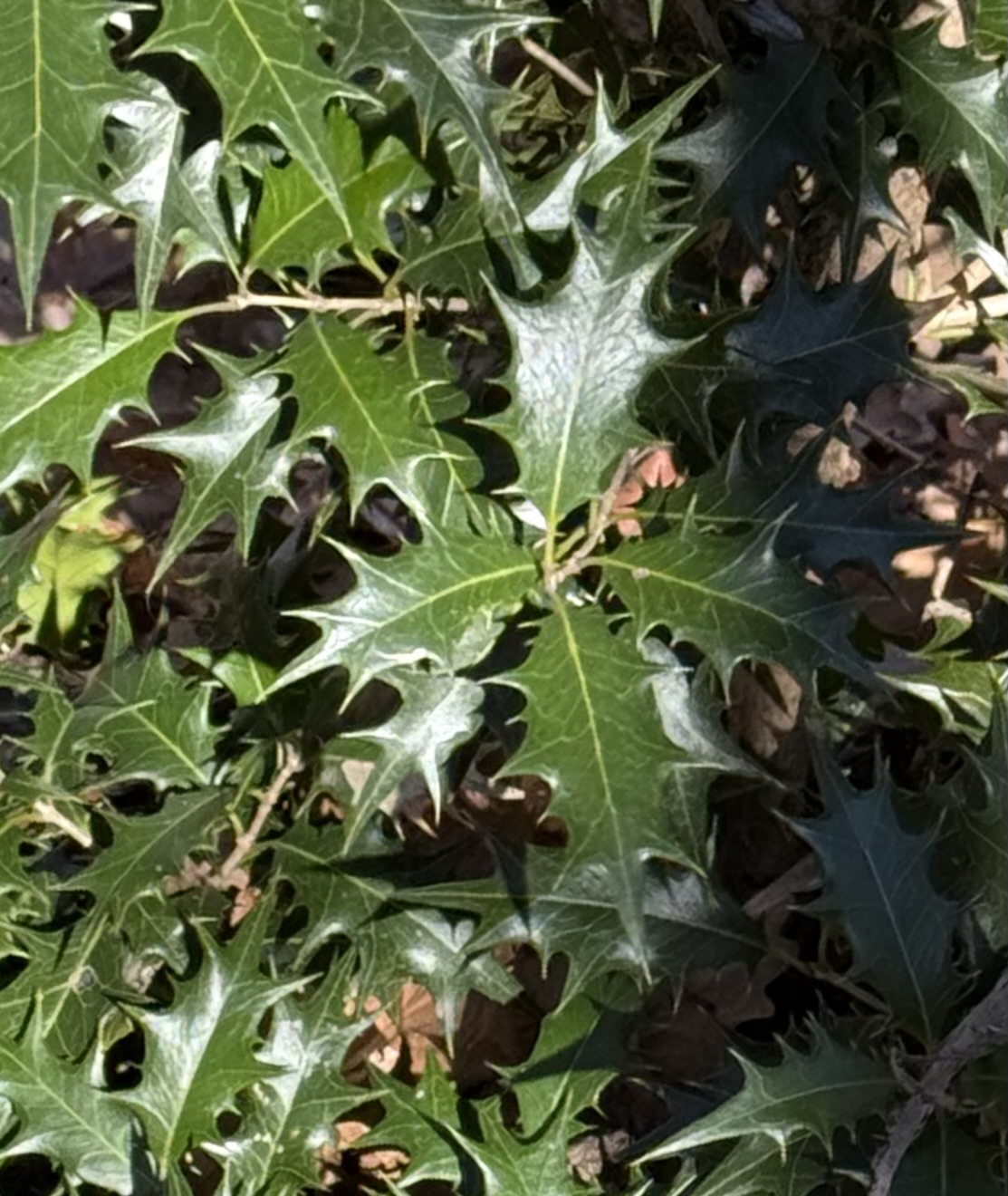
- The "Opposite" Rule: This is the best way to tell it apart from a real holly. On a Holly Olive, the leaves grow in opposite pairs (directly across from each other on the stem). Real hollies have alternate leaves (staggered along the stem).
- Changing Leaves: Young bushes have leaves with long, sharp spines. However, as the bush gets older, the new leaves often lose their spikes and become smooth and oval-shaped.
- Veins: Look closely at the leaves; the veins are usually a light green or yellow color.
- Flowers & Berries: In late summer or early fall, it produces tiny, white flowers that smell very sweet. These eventually turn into dark blue or black berries.
How to Remove It
Manual Control (By Hand)
- Dig it Out: For smaller plants, you must remove the entire root system. Using a tool like a "root puller" can make this much easier.
- Bag It: Once pulled, the plant should be placed in a bag and disposed of so it doesn't try to regrow.
Chemical Control
- Stump Treatment: For large, established bushes, the most effective method is the "cut stump" technique. You cut the main stems near the ground and immediately apply a broad-spectrum herbicide (weed killer) to the freshly cut surface. This kills the roots so the bush cannot sprout back.
Pro Tip: No matter which method you use, always go back and check the site during the next growing season to make sure no new sprouts have appeared!
More information: