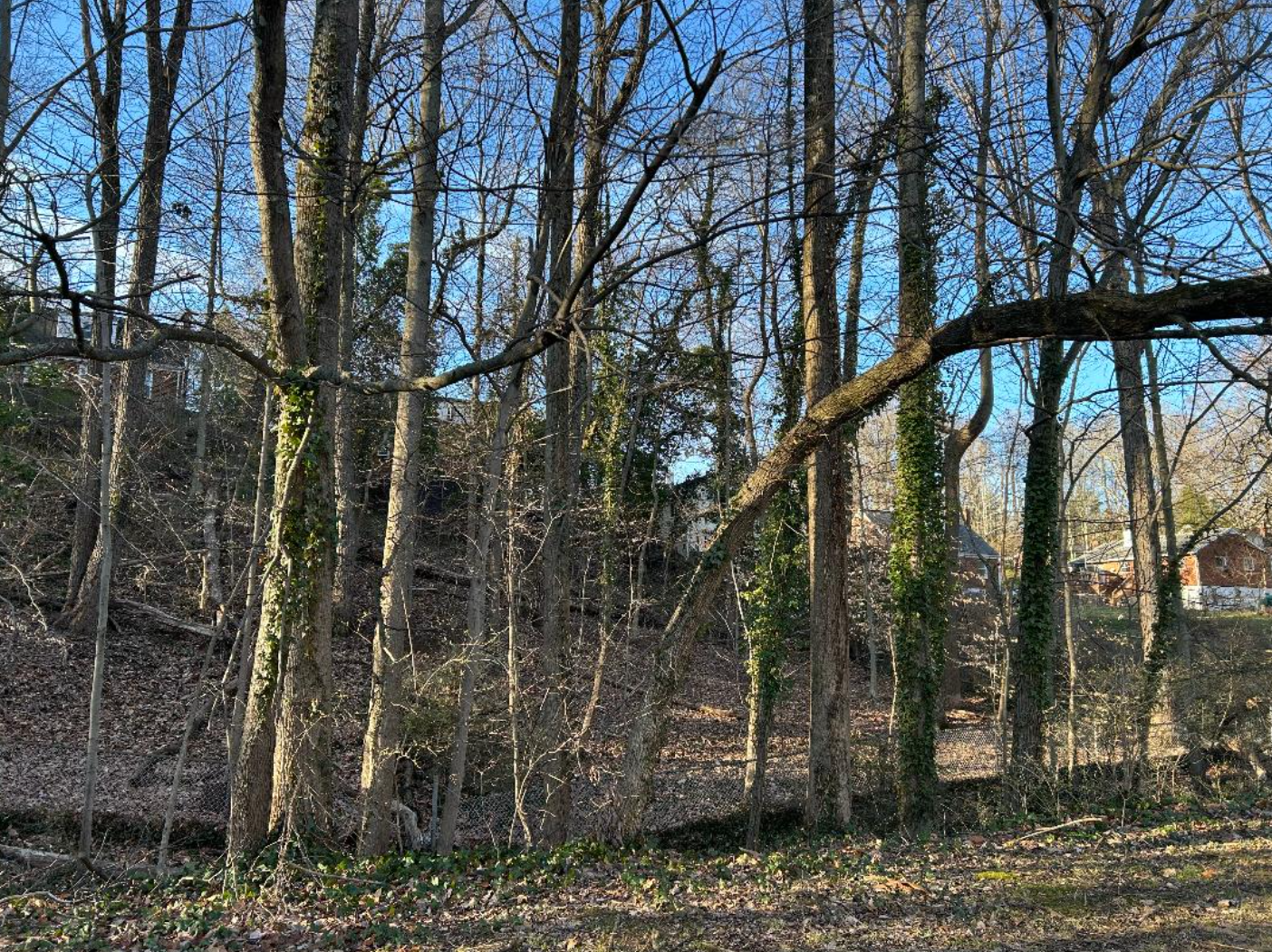
 Before Restoration
Mini-grant Inspires Exceptional Volunteer Effort in Falls Church
The Lake Barcroft Association is a wooded private community in Falls Church. The SEED Environmental Club was established in 2023 as a hands-on working group of the Lake Barcroft Environmental Quality Committee. When invasive vines began noticeably coating trees in their community, the club decided to create a long-term invasive plant management plan and reach out to Fairfax PRISM for assistance. The community became highly involved in the effort, more than doubling the amount of volunteer hours to meet grant requirements, and volunteer events are still continuing after the grant period has ended.
Main Species of Concern: English ivy, porcelain berry, winter creeper, broad-leaf bittersweet, and sweet autumn clematis.
Previous Management: Before the grant application, the Lake Barcroft Association had been using VDACS licensed pesticide applicator volunteers to treat tree-of-heaven present in the community.
Management Strategy: Lake Barcroft used a combination of their hired contractor, Wetland Solutions, and volunteers from their community to complete the project. The grant-funded work by their contractor included cutting of invasive vines on trees and treating the stumps with triclopyr. Vines were cut at shoulder height and left on the trees to prevent injury to the tree. Volunteer work consisted of manual uprooting of small invasive shrubs and vines and cutting of vines on trees. Herbicide-listened SEED volunteers also treated the stumps of vines after cutting.
Project Outcomes
Volunteer hours: At least 25 community members worked a total of 102.7 volunteer hours
Trees saved:The project’s original goal was 28 trees and they ended up saving 147 trees
Scope of the grant: The project’s original scope was for 0.88 acres and they ended but rescuing 2.42 acres of wooded land from invasive plants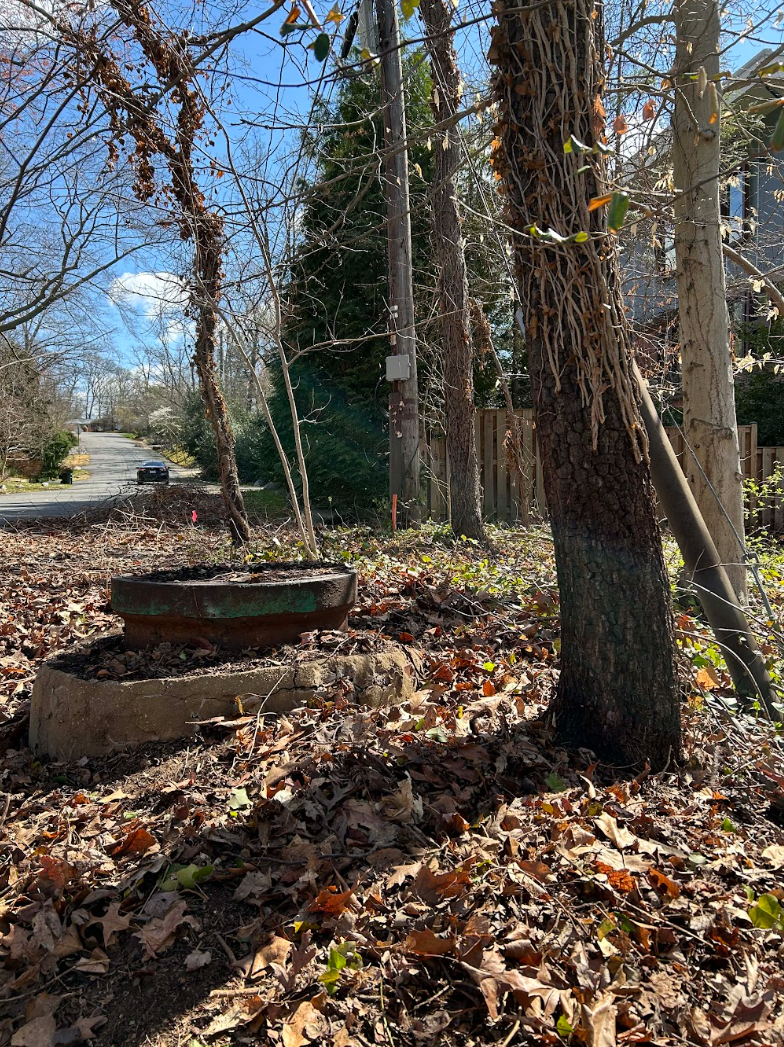 After Restoration
Financial Summary
The Lake Barcroft Association requested a reimbursement of $0 and were required to meet a 50% contribution match of $0. They completed 102.7 volunteer labor hours to meet contributions, equaling a $3,572.93 match ($34.79/hr). Their match exceeded the minimum required match by $0 or 0%.
Community Education
- Lake Barcroft is a community of 1045 homes and approximately 3000 residents. The SEED Environmental Club provided educational outreach to their community regarding tree rescue events and invasive plant management through a monthly newsletter, Constant Contact announcements, and the HOA list serv. All Fairfax PRISM events were reported through these channels both to encourage volunteerism and to educate their neighbors about the threat of invasive plants to the health of the trees in our common areas and on their own properties. This includes a monthly Thug of the Month article that highlights a specific invasive plant that is in bloom at the time of publication and includes information on proper removal and native replacements.
- Thirty Tree Rescuer door hangers were given to our core members to be distributed to their neighbors as needed.
- Tree Rescuer brochures were made available for residents at Fairfax PRISM volunteer events and at an HOA community event hosted by the SEED Environmental Club on March 7, 2026. The brochures are also routinely included when the club sets up a table at yearly community events (Sand Days, Newcomer’s Earth Day, Lake Fest, Spring-Ring-A-Ding, etc.).
- Fairfax PRISM signage is displayed at bi-yearly Fairfax PRISM Week of Action Invasive Plant Removal events. During a Board meeting on February 18, 2026, the SEED Environmental Club was delighted to report to the Lake Barcroft Board and residents that we had secured the Fairfax PRISM mini-grant. The meeting was attended in person and was also available for residents virtually. Finally, Margaret Fisher described the mission of Fairfax PRISM in an interview with SEED leadership to be published in the monthly newsletter in May 2026.
Next Steps
The Lake Barcroft association plans to continue hosting volunteer work days for invasive plant removal. The volunteer site leader will attend monthly SEED meetings for monitoring progress of planned treatments and early detection of new invasive plants. The association also anticipates the need for occasional professional work.